O mais simples e mais rápido sistema de cache para o WordPress.

Cache Warmer
Hospedagem WordPress com plugin Cache Warmer
Onde posso hospedar o plugin Cache Warmer?
Este plugin pode ser hospedado em qualquer hospedagem que tenha WordPress configurado. Recomendamos fortemente optar por um provedor de hospedagem confiável, com servidores adaptados para WordPress, como o serviço de hospedagem da MCO2.
Hospedando o plugin Cache Warmer em um provedor de confiança
A MCO2, além de instalar o WordPress na versão mais nova para seus clientes, disponibiliza o WP SafePress, um mecanismo singular que protege e aumenta a performance do seu site simultaneamente.
Por que a Hospedagem WordPress funciona melhor na MCO2?
A Hospedagem WordPress funciona melhor pois a MCO2 possui servidores otimizados para WordPress. A instalação de WordPress é diferente de uma instalação trivial, pois habilita imediatamente recursos como otimização automática de imagens e fotos, proteção da página de login, bloqueio de atividades suspeitas diretamente no firewall, cache avançado e HTTPS ativado por padrão. São recursos que potencializam seu WordPress para a máxima segurança e o máximo desempenho.
A fast cache only helps when the page is already in it.
After a cache expires or is cleared, the next visitor may have to wait while WordPress builds the page again. Cache Warmer visits your pages ahead of time, giving your existing caching system the opportunity to prepare a cached response before a customer, reader or campaign visitor arrives.
Choose the pages that matter, control the pace and see what happened. Start a warm-up when you need it, run it on a schedule, or queue published content after an edit.
Cache Warmer complements your caching setup. It does not create a page-cache engine or change which pages your cache considers eligible. It works by making HTTP requests that can populate a properly configured plugin, server or CDN cache.
New in 1.5: faster warming queues, clearer progress
Spend less time managing the queue and more time warming pages. Version 1.5 brings a substantial queue-processing performance improvement for large warm-up configurations. It avoids repeatedly sorting large configuration payloads and handles excluded URLs in bounded batches, while preserving queued work, recovery and configured HTTP visit limits.
In one production observation on a large WooCommerce store, warming worker executions dropped from roughly 100 seconds to 1–3 seconds after the update. This measures individual background-worker executions, not page-load speed or total crawl duration. Results vary with the queue, hosting, page response times and scheduler availability.
Progress reporting now shows completion timestamps, elapsed time that includes pauses, clearly labelled average visit speed and skipped totals on every log page.
Prepare important pages before the next visit
Warm your homepage, landing pages, articles and public product pages without manually opening them one by one. After a deployment or cache purge, start a run to help rebuild the cache for the pages you have selected.
This is especially useful when important pages receive too little regular traffic to stay warm on their own.
Warm the pages you choose
Build a focused crawl or cover more of your public site:
- Start from one or more URLs.
- Include public posts, pages, custom post types and taxonomy archives.
- Discover URLs through entry-point sitemaps.
- Set how many link levels the crawler follows.
- Exclude URLs with plain-text patterns or regular expressions.
- Optionally skip pages whose canonical URL has already been warmed.
Depth 0 visits entry points only. Use a larger depth when you want to discover linked pages, and set exclusions to keep the crawl focused.
Put repeat warming on a schedule
Set an automatic interval in minutes, or start a run manually from WordPress. Enable post-update warming to queue published content after publication or editing, with a configurable delay.
Scheduled runs and post-triggered runs have separate histories, so you can see what ran and why. Background processing uses Action Scheduler.
Match the crawl to your hosting
Control the maximum pages per minute, request timeout, crawl depth and included assets. Start with a small group of pages, inspect the results and expand the crawl to suit your site’s capacity.
The speed setting is a ceiling, not a promised throughput. Response times and background-worker availability also determine how quickly a run completes.
See more than a completion message
Inspect visited URLs, successful and failed requests, HTTP response codes, error messages and request timings. When returned by the server, logs include cache headers such as cf-cache-status, x-cache and X-WP-Super-Cache.
A dashboard chart summarizes request timings before and after warming. Use the evidence to investigate cache misses, redirects, slow pages and broken URLs. These are HTTP measurements from the warmer, not a visitor’s browser rendering time or Core Web Vitals score.
Include assets and request variants when needed
Choose whether to request discovered scripts, styles, images and fonts. Configure user agents, request headers, cookies and URL parameters for the cache variants you intend to warm.
Optional second visits without custom cookies or URL parameters help cover the corresponding plain request. Request variants need to match your cache rules; additional variants also increase the work performed.
Keep interrupted work recoverable
Pending URLs are stored in the database, and workers coordinate processing of the queue. Interrupted background work can resume through subsequent workers; failed page requests receive a bounded retry and remain visible in the logs.
Configure warm-up log retention to manage history. Recovery information is retained where needed rather than silently discarded.
Local warming included; external warming optional
Run local warming from your WordPress server without an external-warmer subscription. An optional licensed service can request pages from configured external locations. See External Services below for the information shared when that integration is enabled.
Get started with a few cacheable pages, run a warm-up and inspect their cache headers. Then choose the schedule and crawl coverage that fit your site.
External Services
Crawl destinations
Local warming sends HTTP requests to configured entry points and discovered page or asset URLs, which may include external hosts. Those hosts receive the warmer’s connection information and configured request headers, including any cookies or URL parameters you supply. Configure only destinations and credentials appropriate for the crawl.
Optional external warmer
Adding or changing an external-warmer license key sends the site domain and key to https://validate.cachewarmer.xyz/ for validation. When external warming is enabled, the selected service endpoints receive the domain, license key, target URLs and configured request headers, including user-agent and cookie values. Those servers then request the target URLs and return results to the plugin.
Local warming does not require this service. Review the configured servers and avoid sending sensitive session cookies or credentials unless appropriate for your intended use. Contact wp@tmm.ventures for access, service terms and privacy information.
Capturas de tela
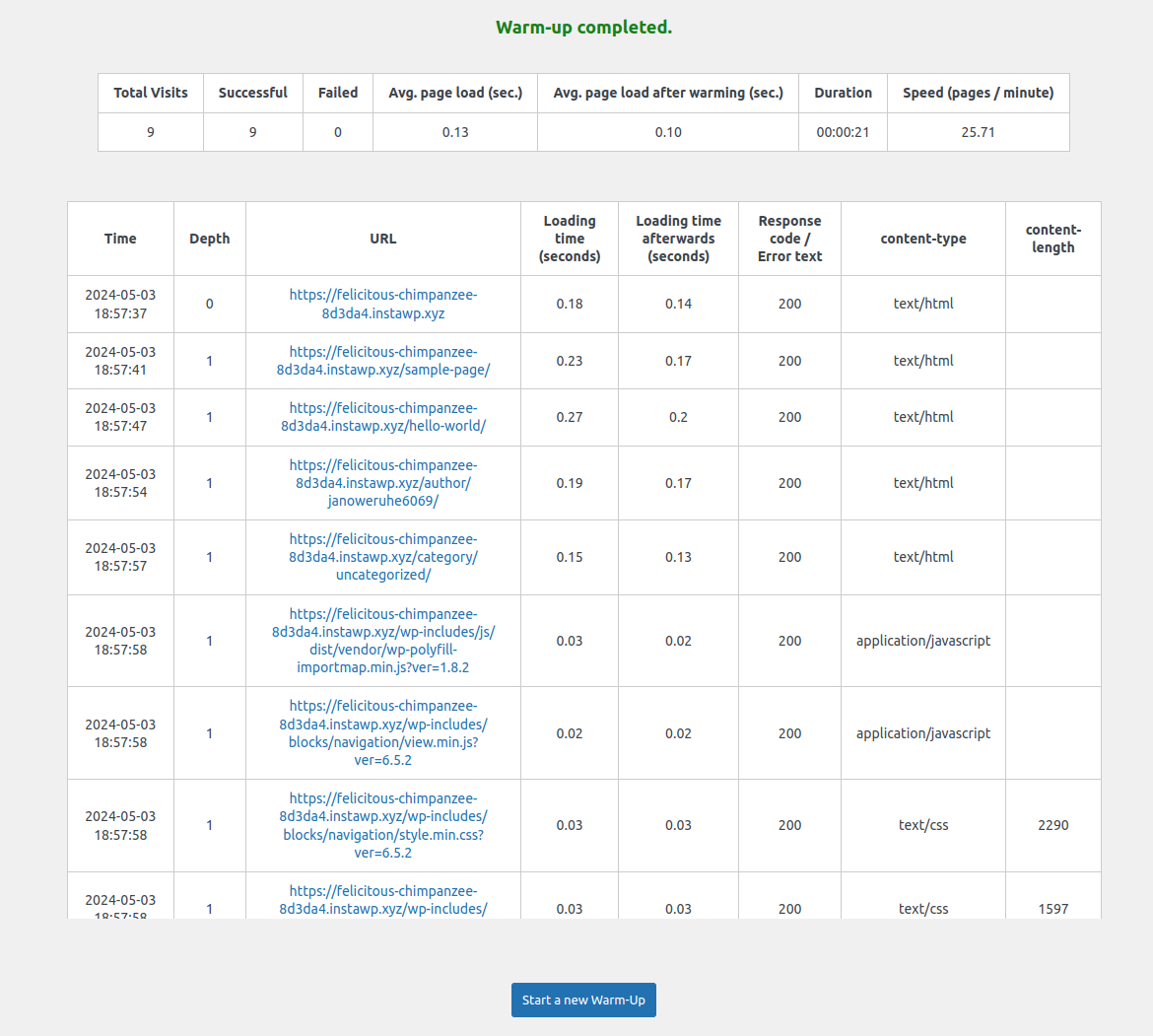
Warm-up summary and visited URLs, with success counts and request timings.
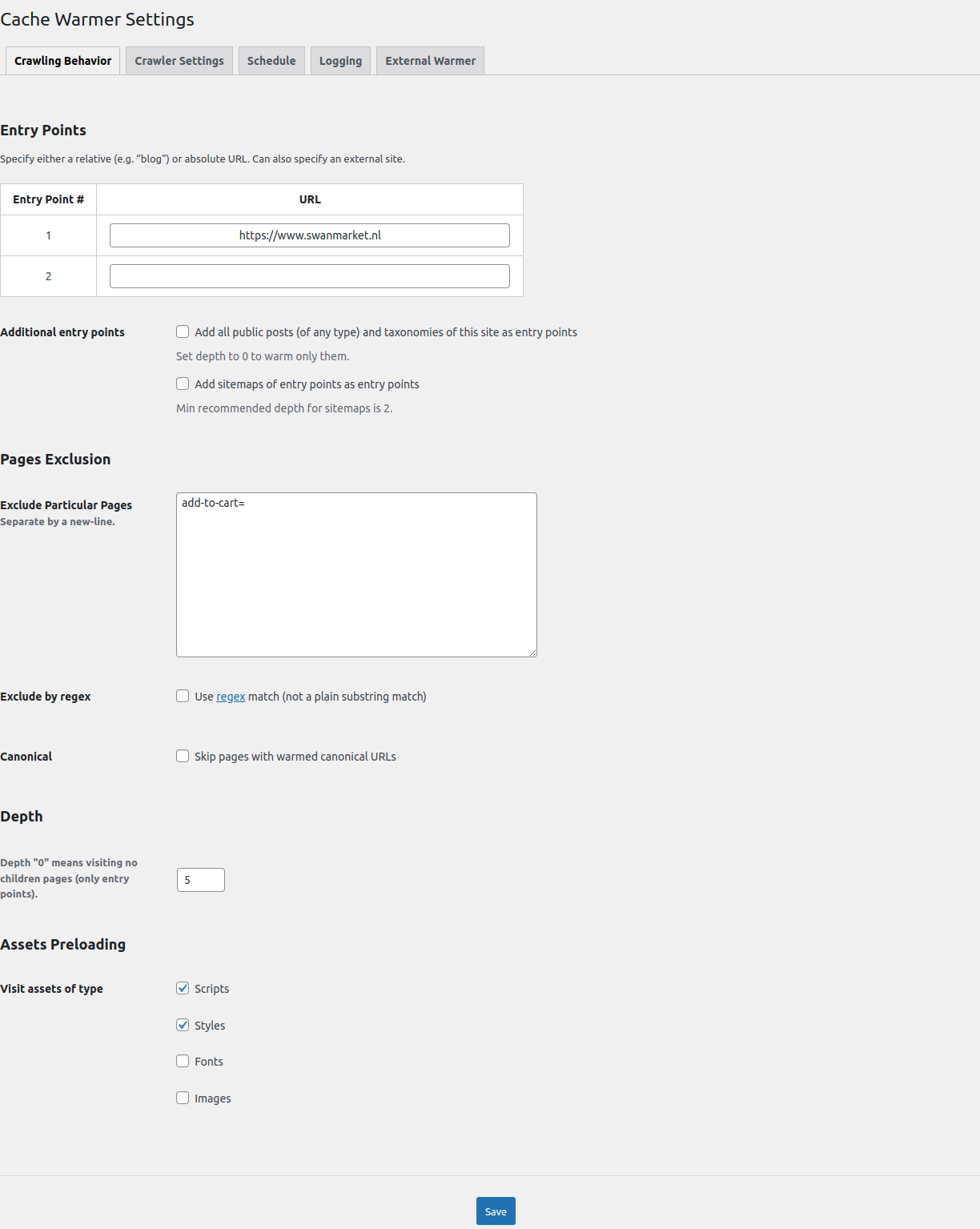
Crawl coverage: entry points, exclusions, link depth and asset selection.
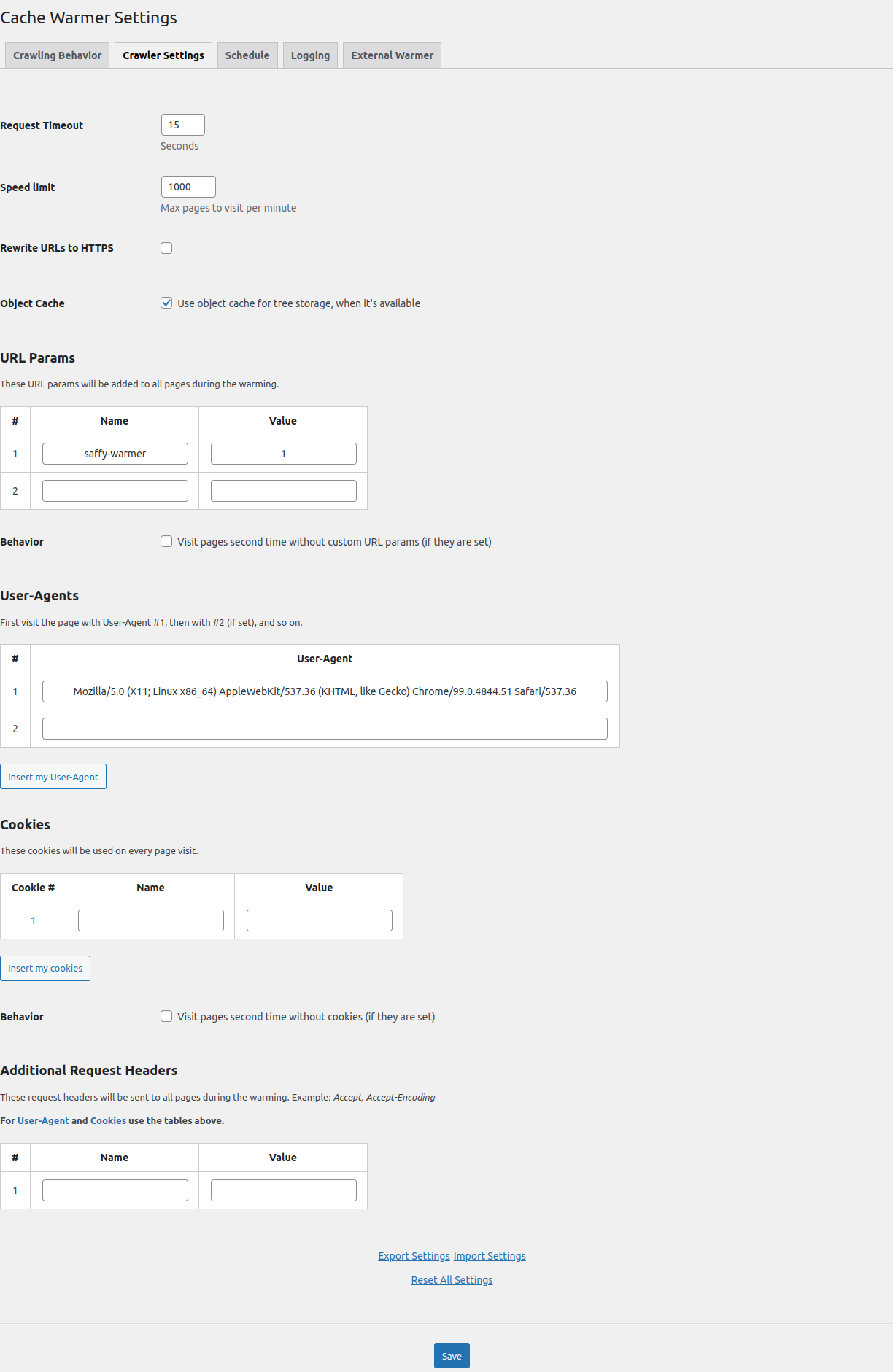
Request configuration: speed, timeout, user agents, cookies and headers. The legacy object-cache queue option shown here is no longer used.
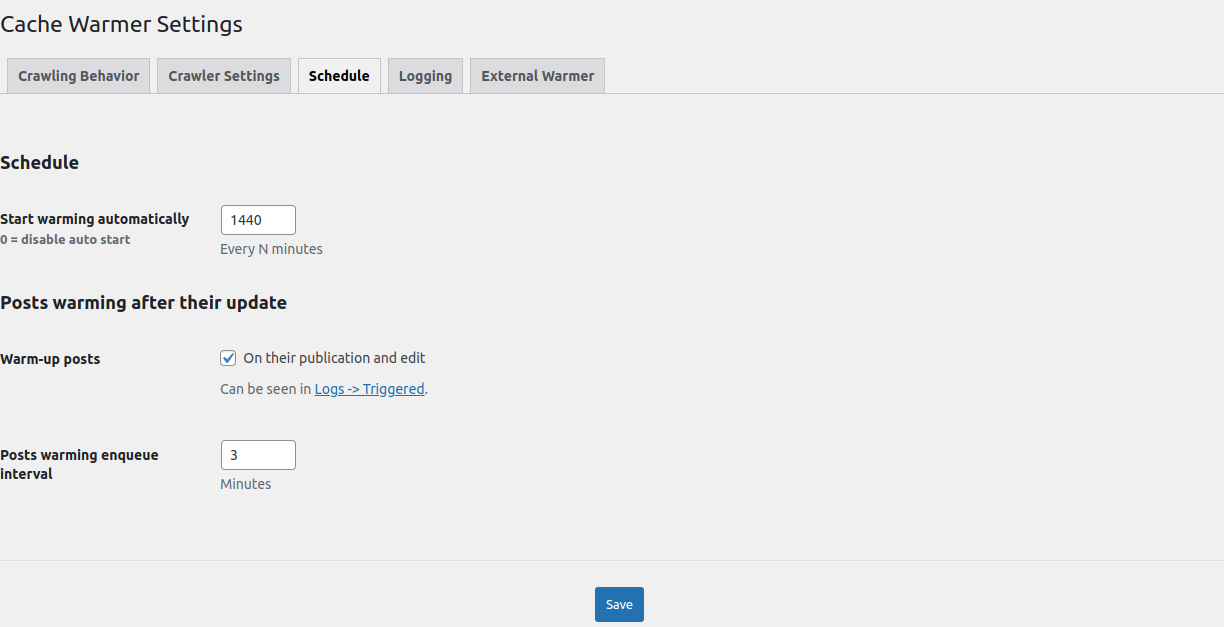
Automatic schedules and warming after content updates.
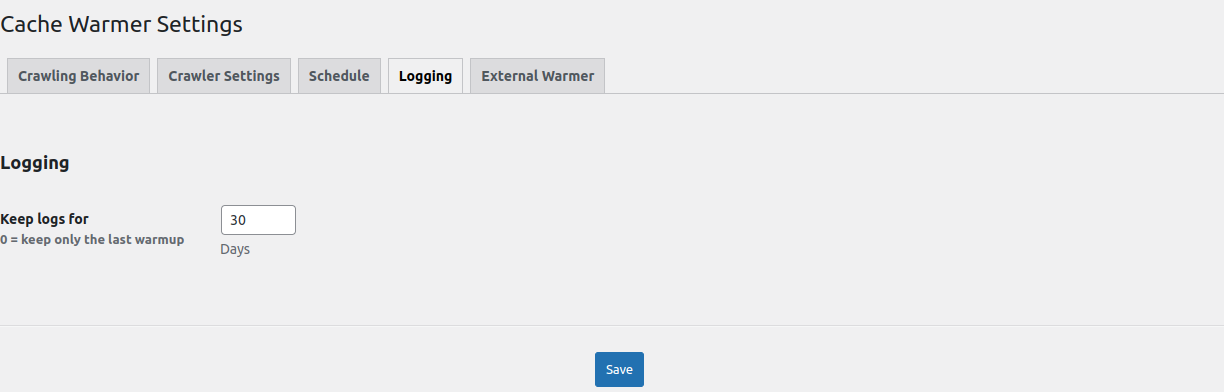
Configurable warm-up log retention.
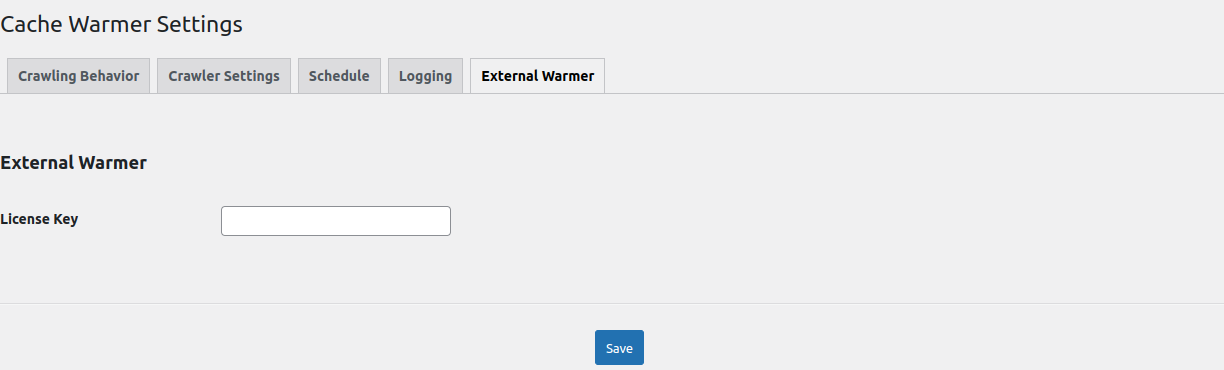
Optional external-warmer license configuration.
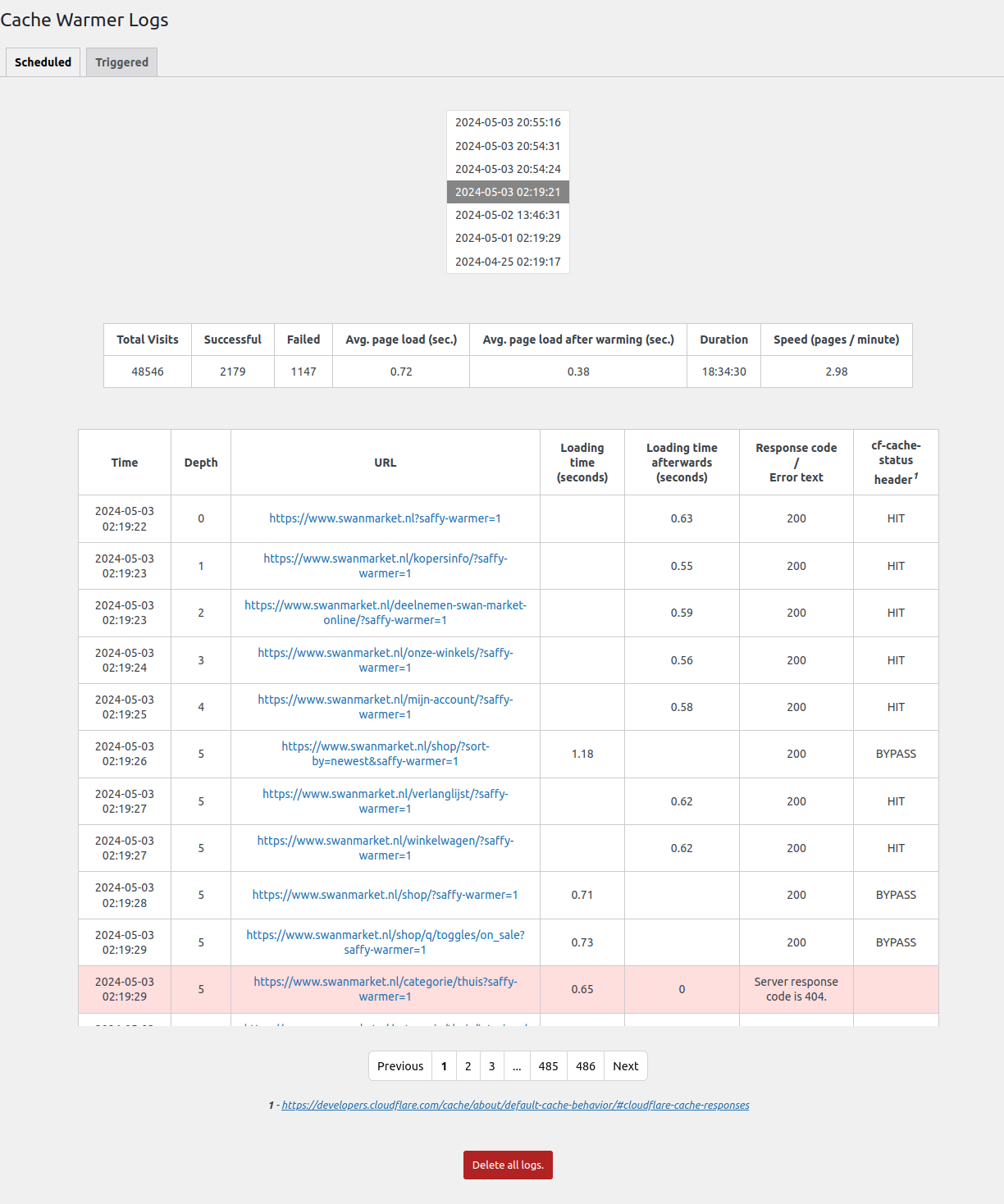
Run history with HTTP results and cache-status headers.
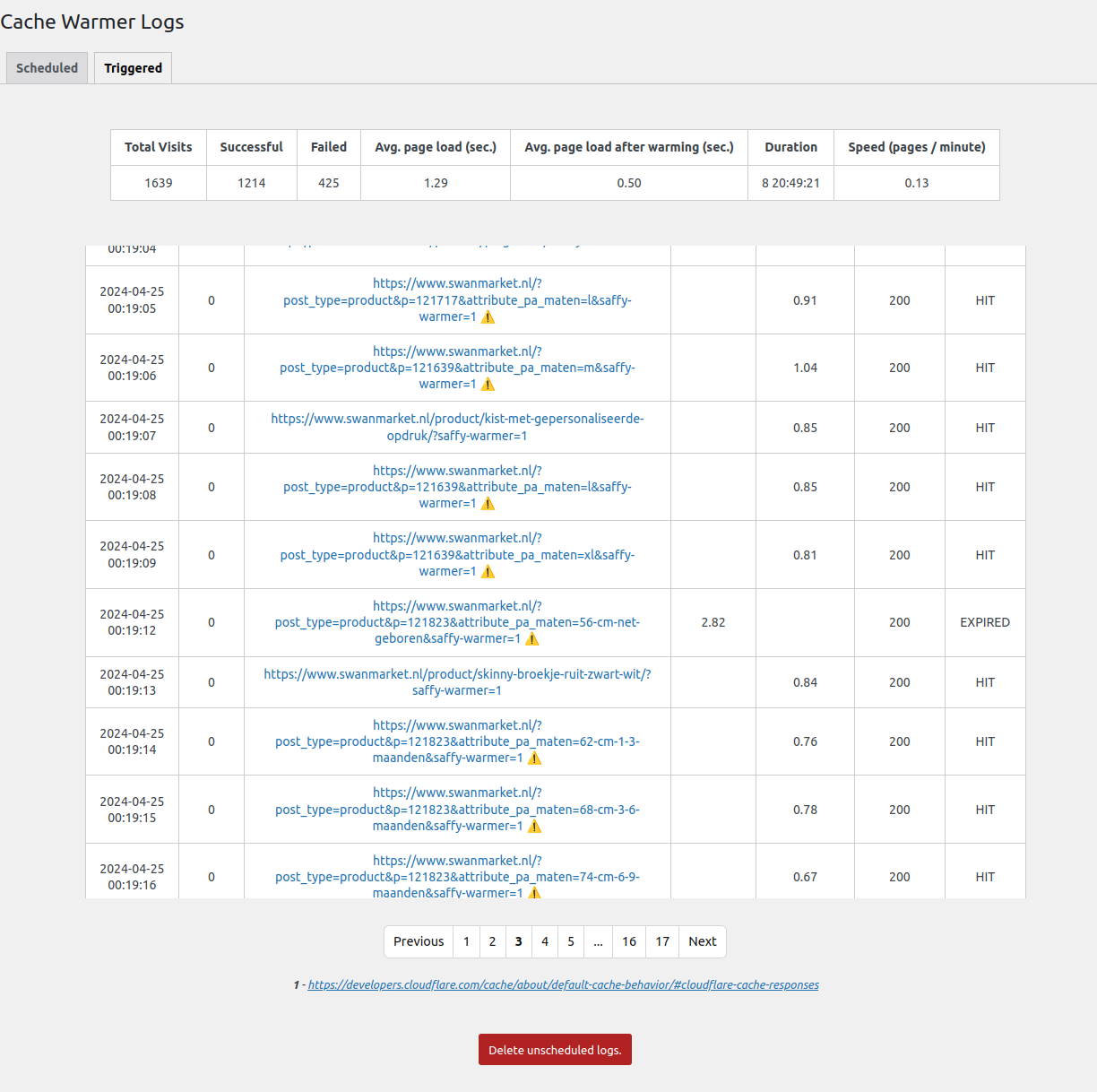
Separate history for warming triggered by content updates.
Plugins semelhantes


Get caching and more with this powerful cache plugin. Cache, optimize images, clean your database and minify for maximum performance.

Uma ferramenta rápida para cache no WordPress que gera arquivos de HTML estático.

Search Engine (SEO) & Performance Optimization (WPO) via caching. Integrated caching: CDN, Page, Minify, Object, Fragment, Database support.

Um painel de cache de objeto persistente turbinado por Redis. Suporta Predis, PhpRedis, Relay, replicação, clustering e WP-CLI.

SpeedyCache is a WordPress cache plugin that helps you improve performance of your WordPress site by caching, minifying, and compressing your website.