
The best WordPress membership and user role editor plugin. Edit roles, restrict content, and now manage it all with an AI assistant.

Access Governance for WordPress (aka AAM)
Hospedagem WordPress com plugin Advanced Access Manager – Restricted Content, Users & Roles, Enhanced Security and More
Onde posso hospedar o plugin Advanced Access Manager – Restricted Content, Users & Roles, Enhanced Security and More?
Este plugin pode ser hospedado em qualquer provedor que tenha WordPress configurado. Recomendamos optar por uma empresa de hospedagem de confiança, com servidores adaptados para WordPress, como o serviço de hospedagem de sites da MCO2.
Hospedando o plugin Advanced Access Manager – Restricted Content, Users & Roles, Enhanced Security and More em um provedor seguro
A MCO2, além de instalar o WordPress na versão mais atualizada para seus clientes, oferece o plugin WP SafePress, um sistema singular que protege e aumenta a performance do seu site ao mesmo tempo.
Por que a Hospedagem WordPress funciona melhor na MCO2?
A Hospedagem WordPress funciona melhor pois a MCO2 possui servidores otimizados para WordPress. A instalação de WordPress é diferente de uma instalação trivial, pois habilita imediatamente recursos como otimização de imagens, proteção da página de login, bloqueio de atividades suspeitas diretamente no firewall, cache avançado e HTTPS ativado por padrão. São recursos que potencializam seu WordPress para a máxima segurança e o máximo desempenho.
Advanced Access Manager (AAM) is an Access Governance platform for WordPress. It helps you understand and control how users, roles, applications, APIs, and other identities interact with your website.
WordPress security is not only about stopping attackers at the perimeter. Security also depends on what authenticated users, applications, integrations, and automated systems are allowed to do once they have access.
A user may have more capabilities than their job requires. An old account may still have administrative privileges. An Application Password may expose unnecessary API access. A plugin may introduce new capabilities or endpoints. An AI agent may be connected through an account with far more authority than it needs.
These are access governance problems.
AAM provides the tools to discover, define, enforce, and audit access across WordPress so you can reduce excessive privileges, prevent broken access controls, and build a security model based on the principle of least privilege.
Security starts from within.
What is Access Governance?
Access Governance is the continuous practice of answering four fundamental questions:
Who has access?
What can they access?
Why do they have that access?
Should they still have it?
In WordPress, the answers are rarely determined by a user’s role alone.
Effective access can be influenced by roles, capabilities, direct user permissions, content-level rules, plugins, authentication methods, API endpoints, Application Passwords, integrations, and custom application logic.
AAM brings these controls together so that WordPress access can be intentionally designed, consistently enforced, and periodically reviewed.
Access Governance with AAM
-
Discover Effective Access – Understand how roles, capabilities, inherited permissions, and access rules determine what an identity can actually do.
-
Enforce Least Privilege – Give users, applications, and integrations only the access required to perform their legitimate responsibilities.
-
Mitigate Broken Access Controls – Reduce the risk of unauthorized actions caused by excessive permissions, misconfigured roles, exposed endpoints, or inconsistent access rules.
-
Govern Users & Roles – Manage WordPress roles, capabilities, user permissions, and access inheritance with greater precision.
-
Protect WordPress Resources – Control access to posts, pages, media, taxonomies, custom post types, administrative areas, and other WordPress resources.
-
Govern API Access – Control access to REST API endpoints, XML-RPC functionality, and other programmatic interfaces.
-
Audit Access Continuously – Identify excessive privileges, risky configurations, unnecessary credentials, and other access-related security concerns before they become incidents.
-
Define Access as Policy – Use JSON Access Policies to describe portable, auditable, and automation-friendly access rules.
-
Build Custom Access Controls – Use the AAM PHP Framework and developer APIs to implement application-specific authorization and governance requirements.
Key Features
-
Security Audit – Evaluate WordPress for access-related security risks, configuration problems, excessive privileges, and other potential weaknesses.
-
Role & Capability Management – Create and manage roles and control WordPress capabilities beyond the default role system.
-
User-Level Access Controls – Refine access for individual users without creating unnecessary roles.
-
Content Access Governance – Control who can view, edit, publish, delete, or otherwise interact with WordPress content.
-
Backend Access Control – Restrict administrative functionality and control access to WordPress backend menus and features.
-
Frontend Access Control – Define access rules for visitors, authenticated users, roles, and individual accounts.
-
API Access Control – Govern access to REST API endpoints, XML-RPC, and programmatic WordPress functionality.
-
Authentication & Identity Controls – Manage authentication-related functionality and additional mechanisms for securely accessing WordPress.
-
JSON Access Policies – Define complex access requirements as structured, reusable policies.
-
Developer Framework – Extend AAM or build custom authorization logic using its PHP APIs, hooks, and services.
Beyond Roles and Capabilities
WordPress roles and capabilities are an important part of authorization, but they are only part of the complete access model.
Modern WordPress websites may expose functionality through the admin dashboard, frontend requests, REST APIs, XML-RPC, Application Passwords, plugins, integrations, automation platforms, and AI agents.
That means securing WordPress requires looking beyond the question:
“What role does this user have?”
The more important question is:
“What can this identity actually do?”
AAM is designed around this broader view of effective access.
Built for Modern WordPress Security
AAM is built for site owners, developers, agencies, and security professionals who need more than basic role management.
Use AAM to establish a repeatable access governance process:
Discover Evaluate Define Enforce Verify Audit
Whether you manage a single website or hundreds of client installations, the goal remains the same: maintain a clear, intentional, and defensible access model.
AAM is used on 150,000+ WordPress websites and has been developed specifically around WordPress authorization and access control for more than a decade.
Most core functionality is available for free, with advanced capabilities available through premium extensions.
No ads. No hidden tracking. No unnecessary data collection.
Just access controls you can understand, enforce, audit, and trust.
Capturas de tela
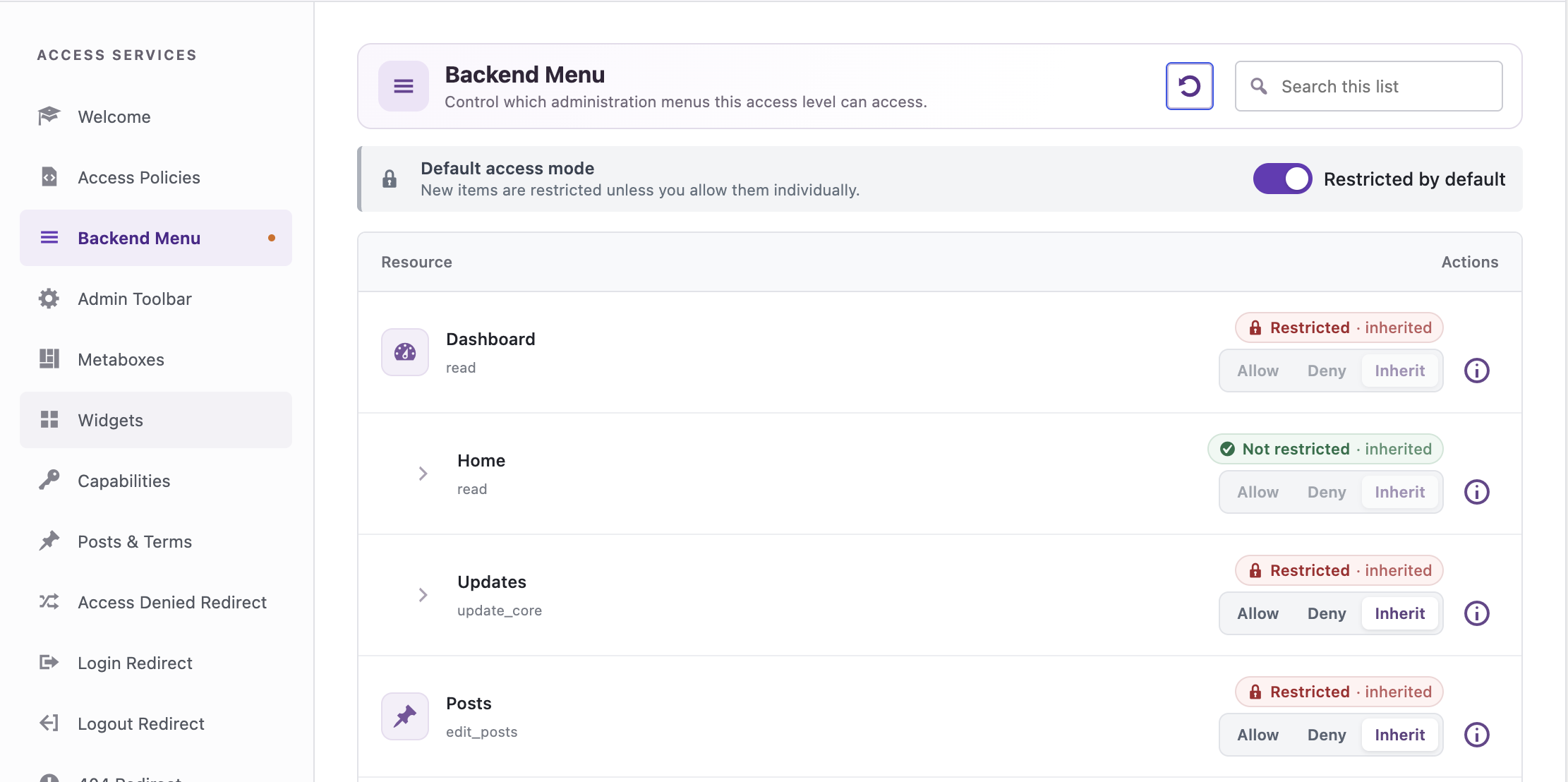
Manage access to backend menu
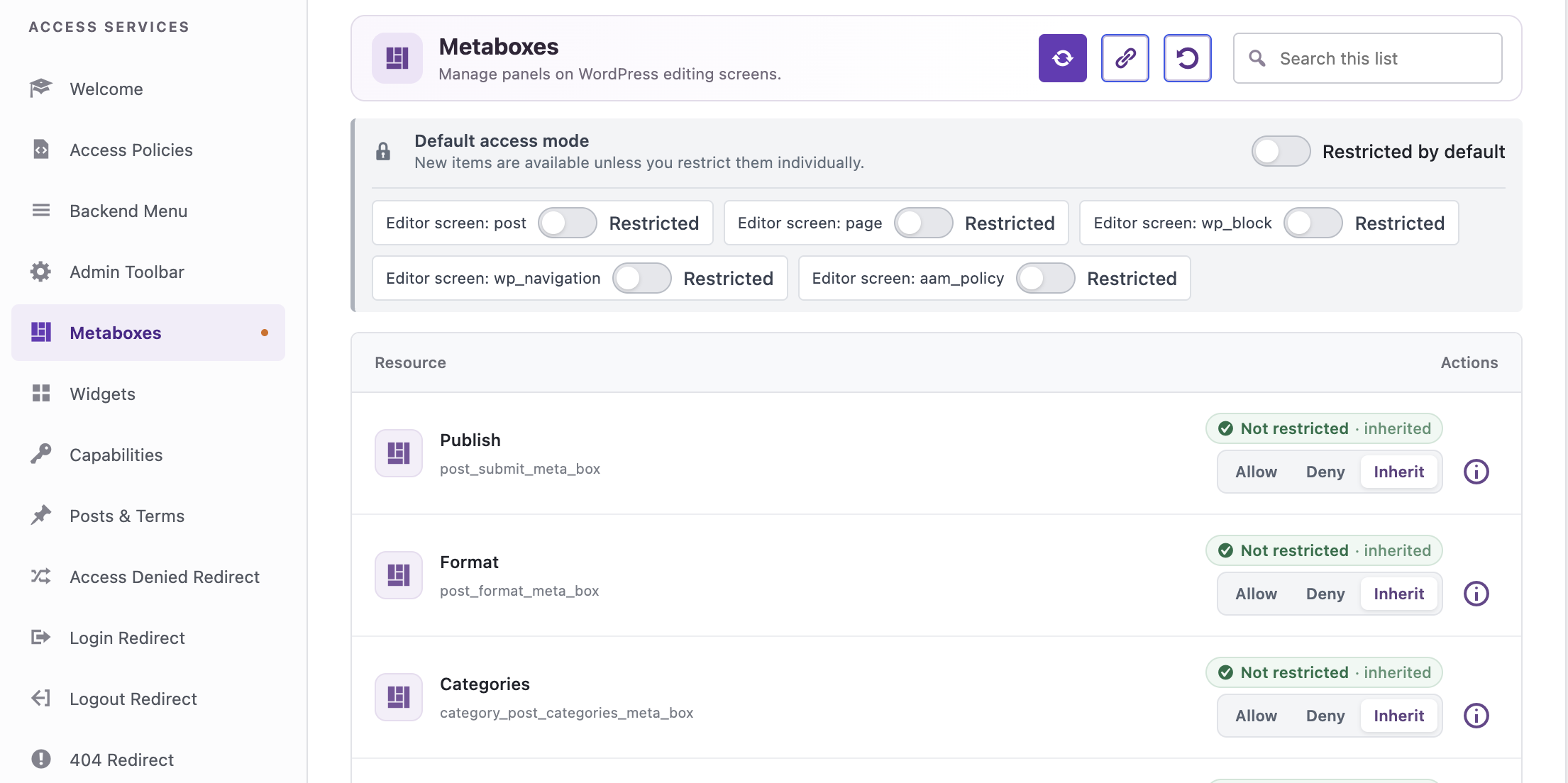
Manage access to metaboxes & widgets
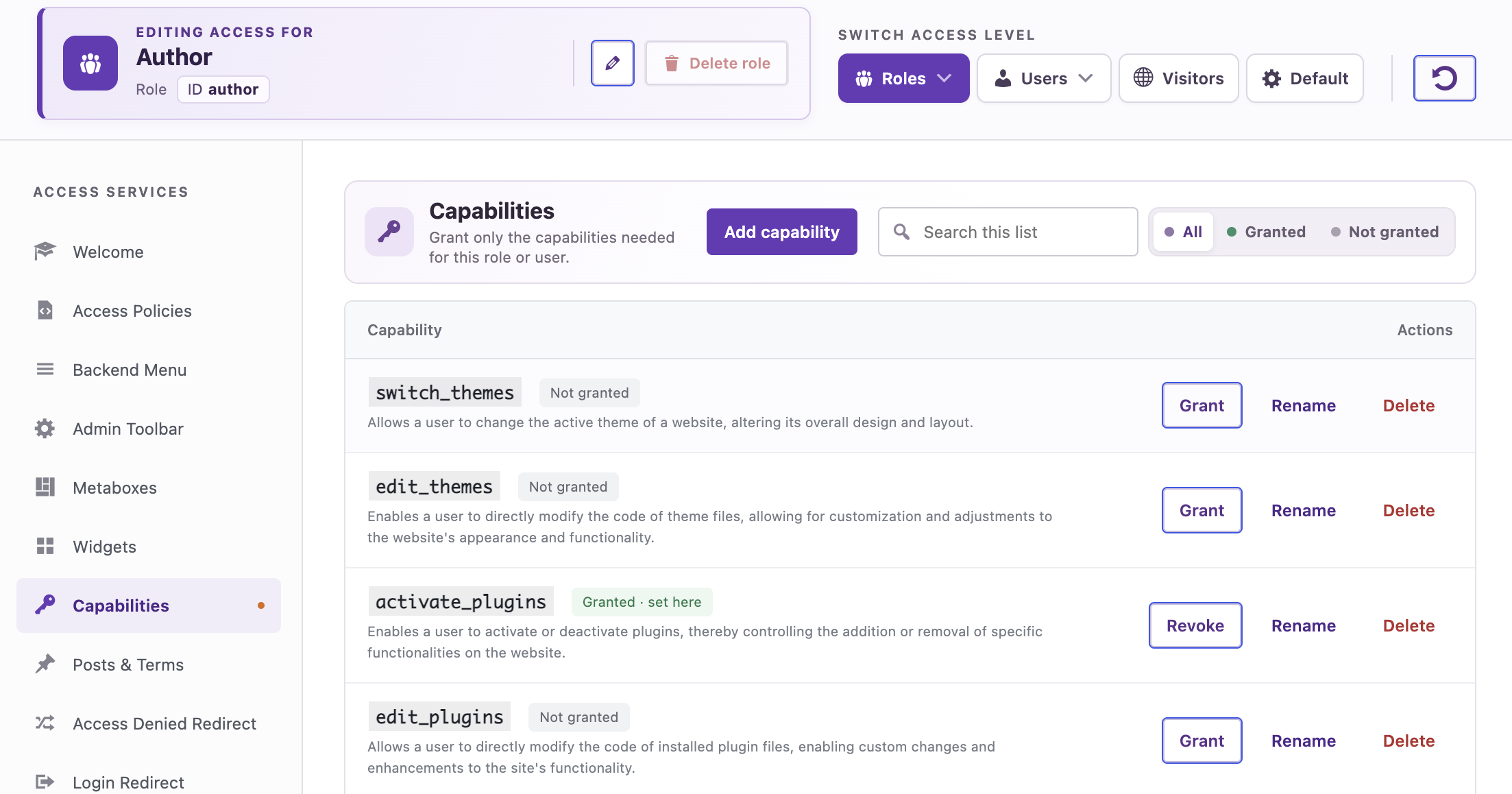
Manage capabilities for roles and users
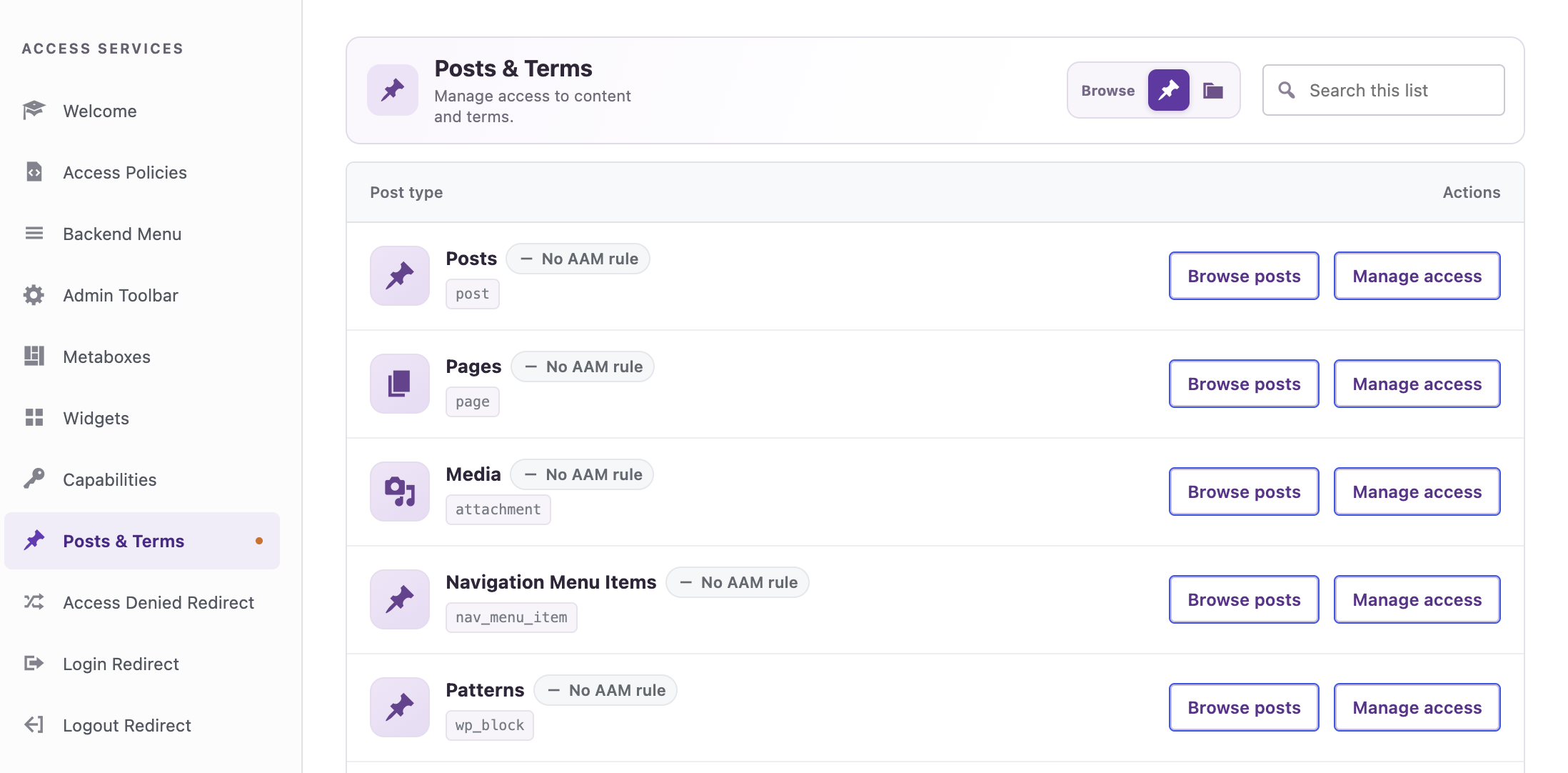
Manage access to posts, pages, media or custom post types
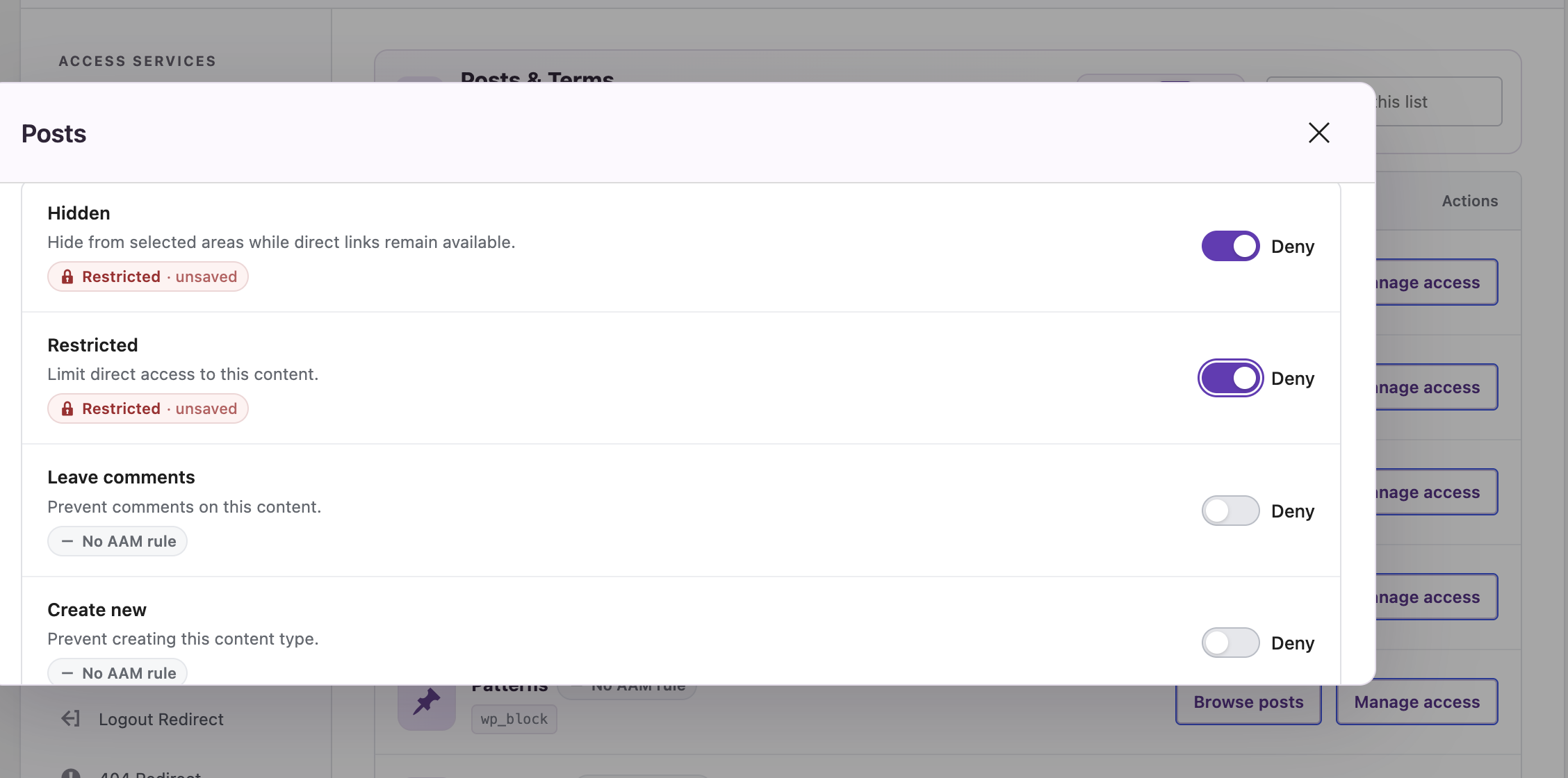
Posts and pages access options form
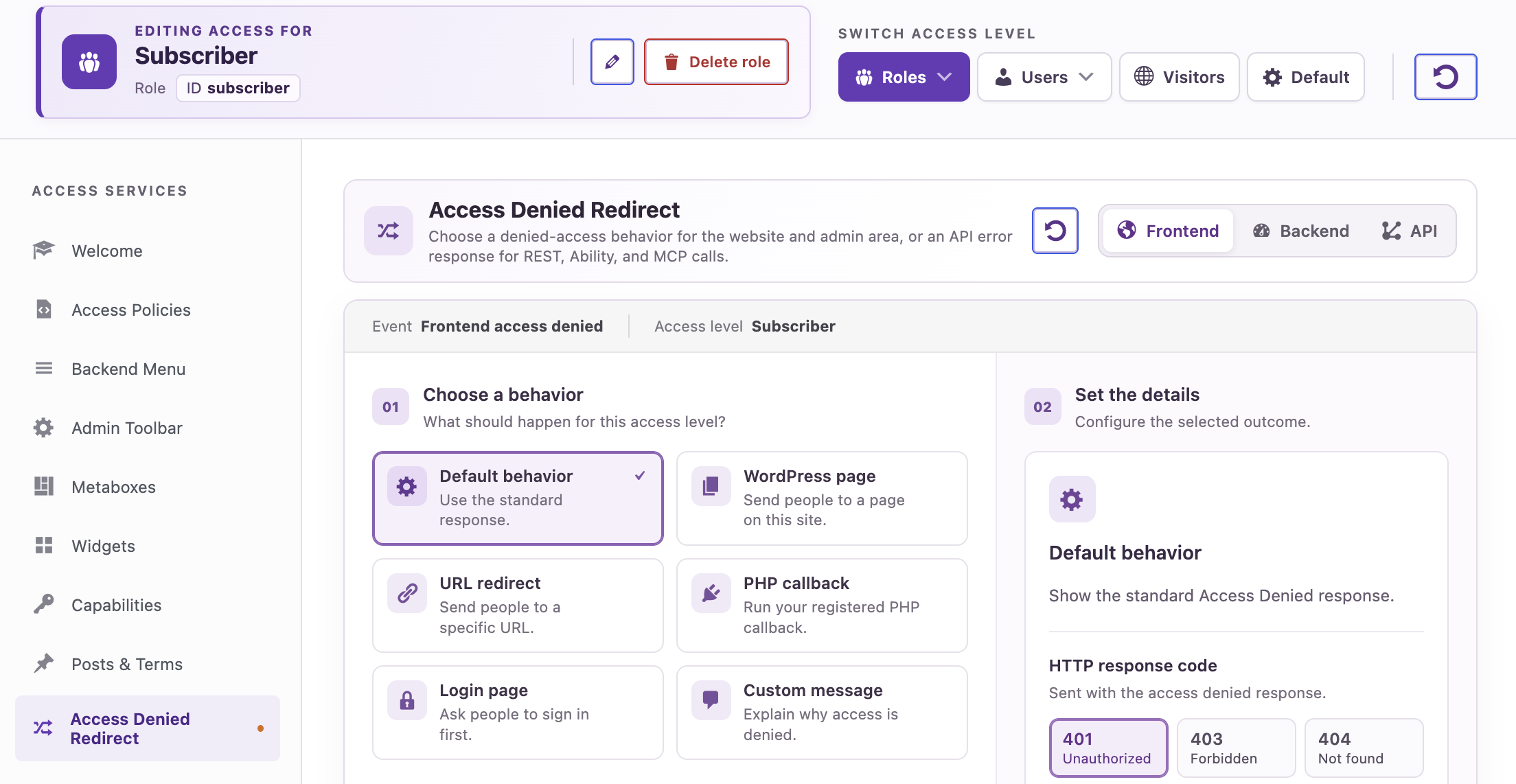
Manage access denied redirect rule
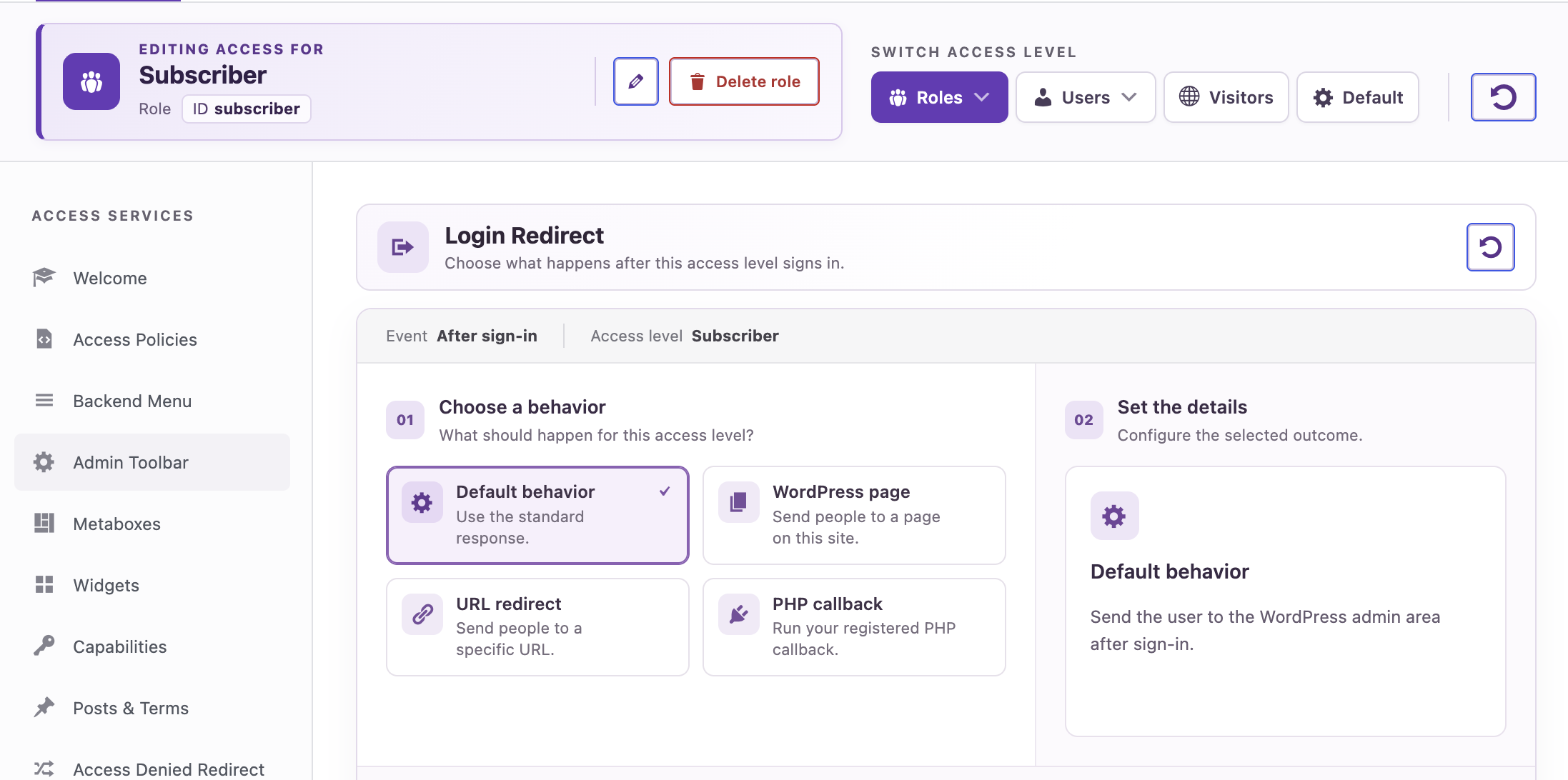
Manage user login redirect
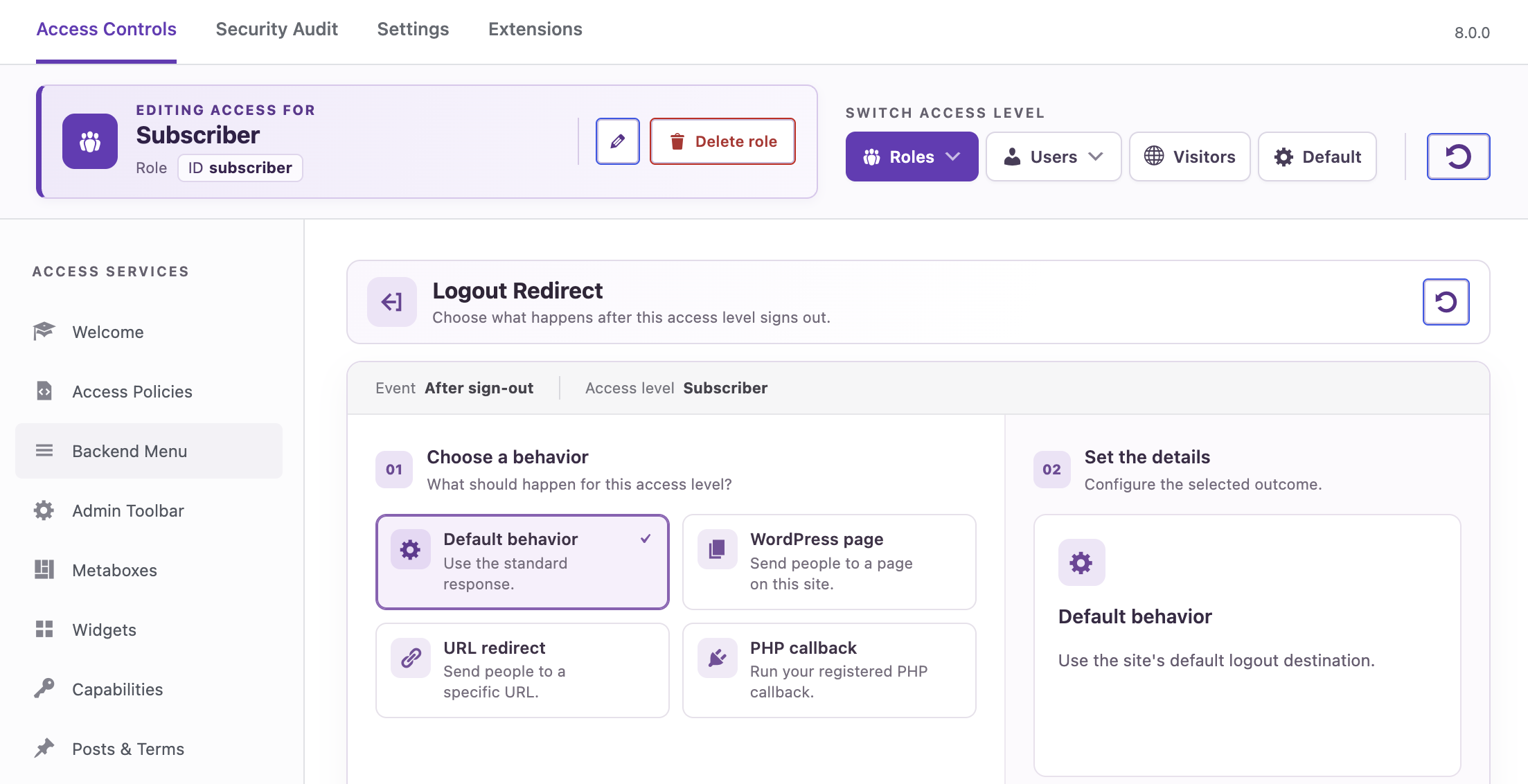
Manage user logout redirect
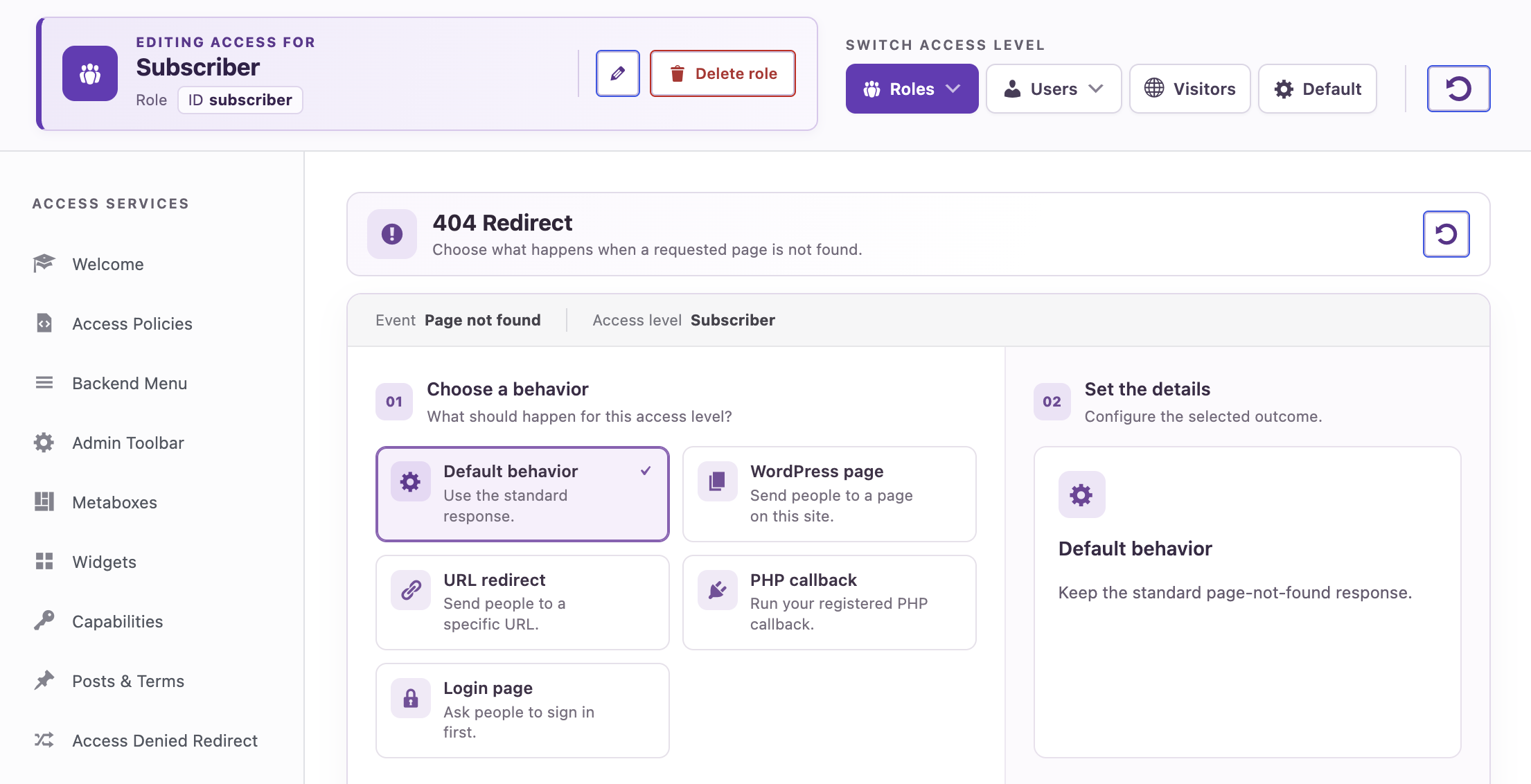
Manage 404 redirect
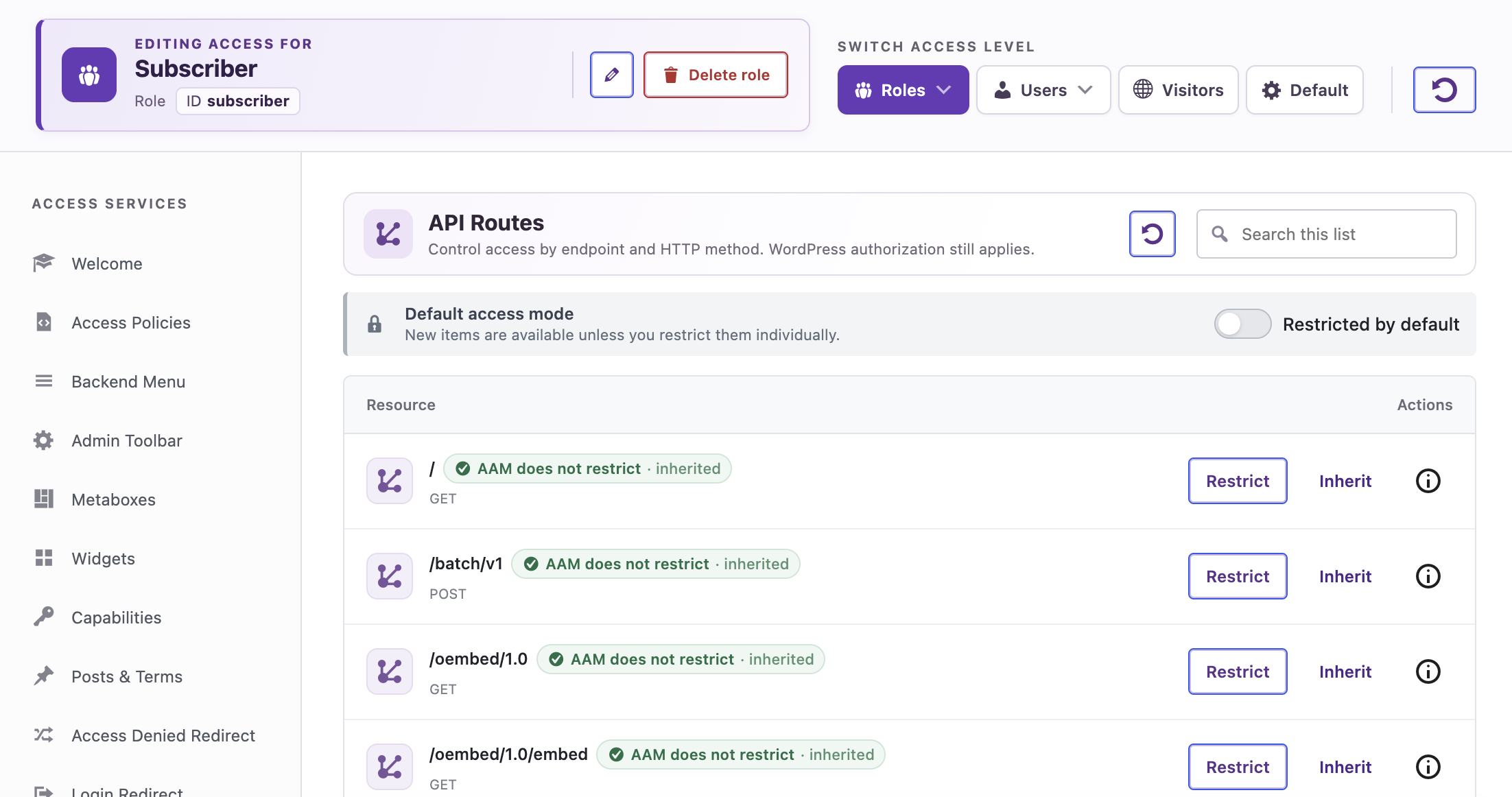
Manage access to API routes
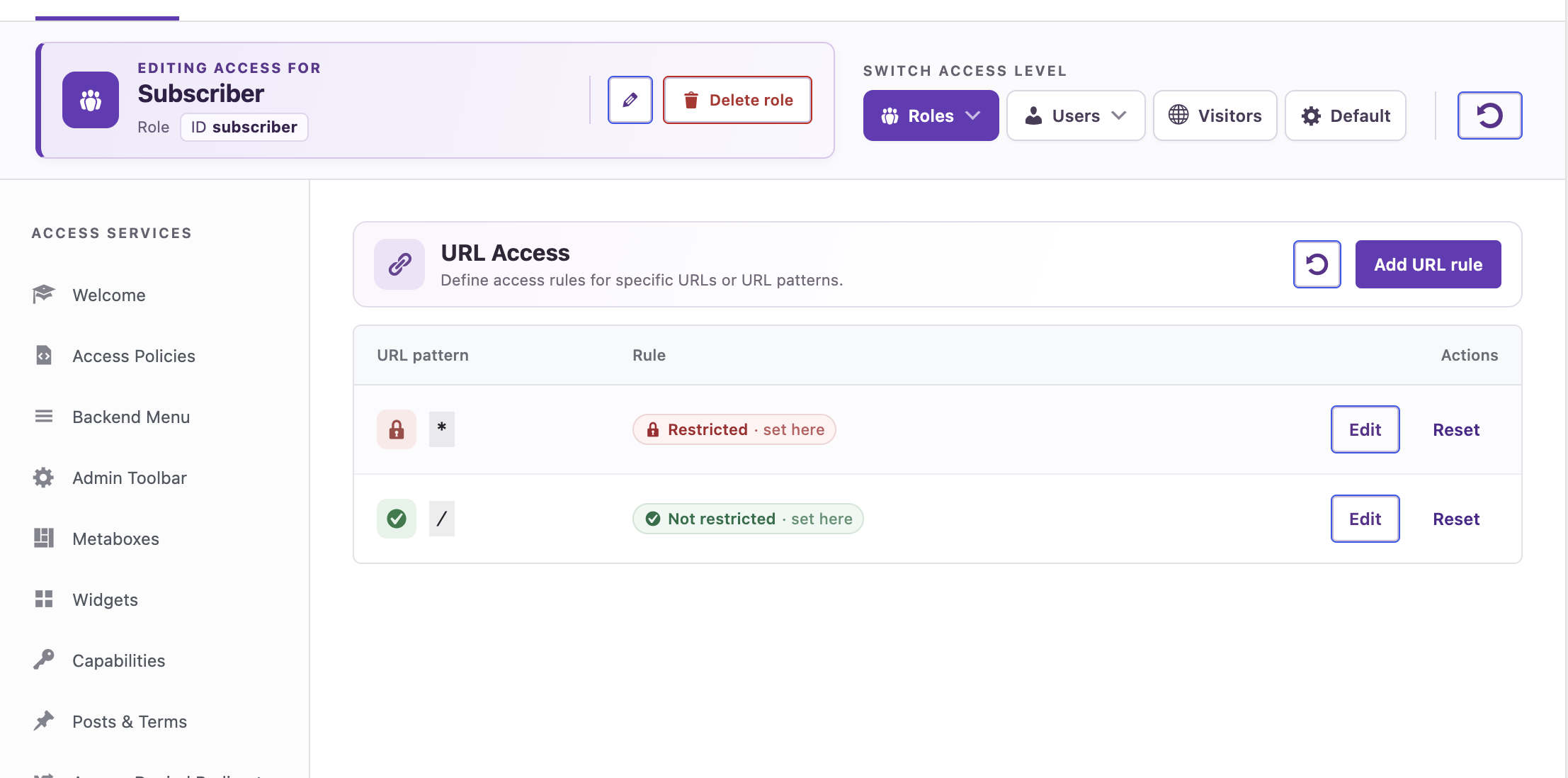
Manage access to any URL on your site
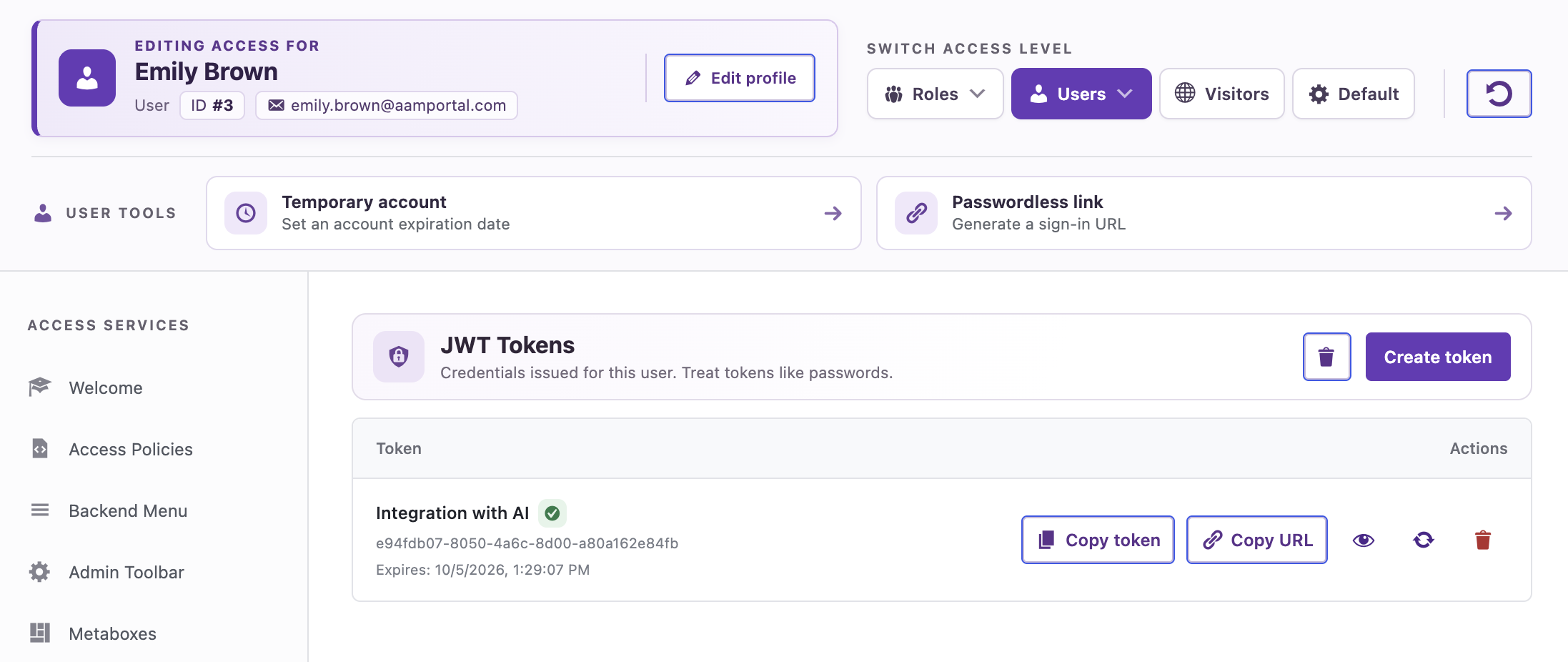
Manage JWT tokens for any user
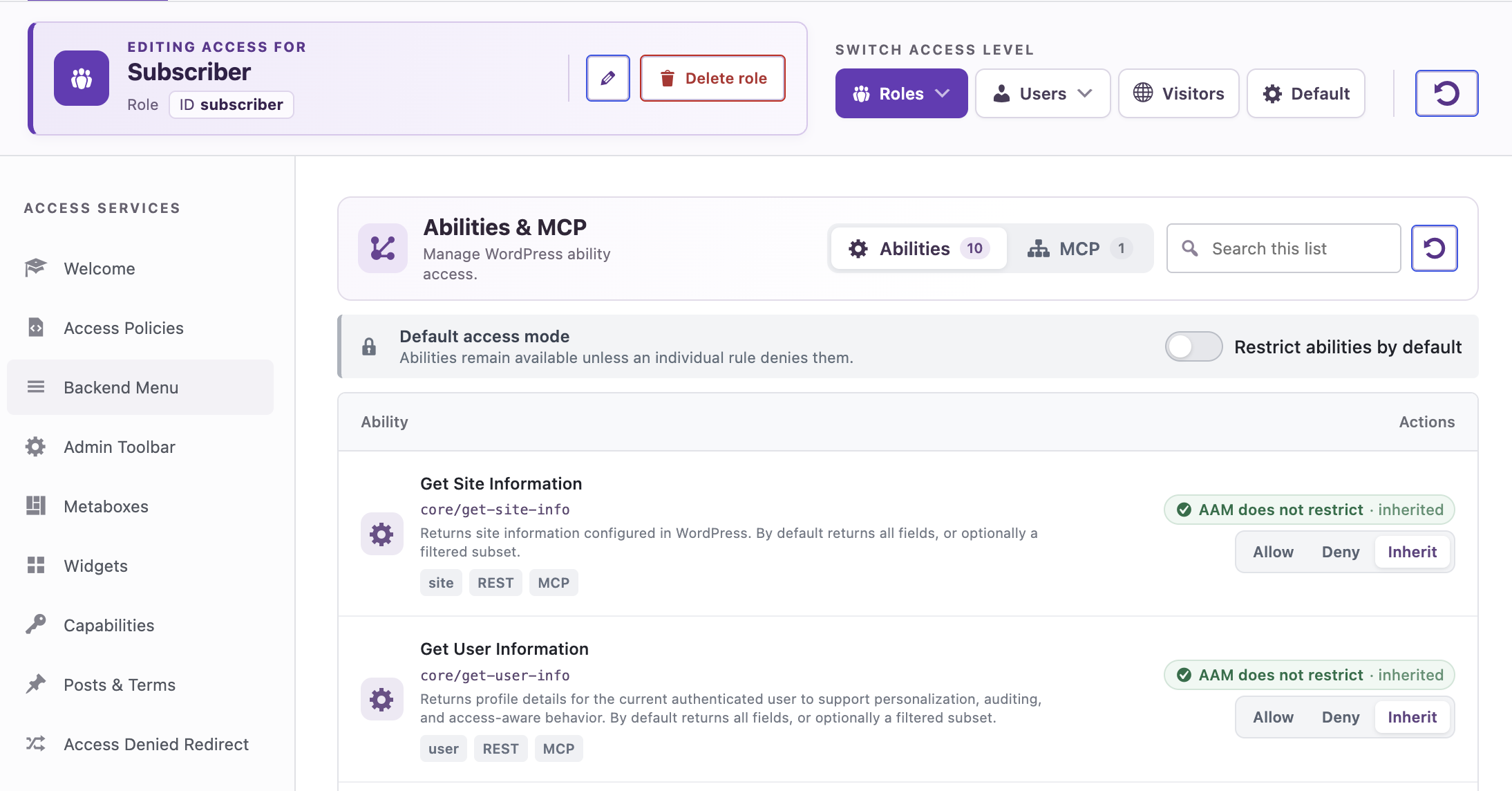
Manage access to WordPress abilities, MCP servers and MCP primitives
Plugins semelhantes


Membership & community plugin with user profiles, registration & login, member directories, content restriction, user roles and much more.

Setup paid membership, accept payment, sell subscription & digital product, paywall, create login & registration form, user profile & member directory

O Simple Membership adiciona funcionalidade de associação ao seu site. Disponibilize conteúdos apenas para os membros, usando facilmente a proteção de conteúdo.

Build your email subscriber lists, send email marketing newsletters, create landing pages, build custom subscription forms with the Form Builder block …

Create an AI-powered frontend post form, user registration form, user profile page, membership site, user directory, and content restriction.